
Mechanical Engineering Calculators
Every calculator draws what it is calculating and shows its working. Size a section, check a column, pick a bearing, torque a bolt, set a spindle speed, find a fit or a pressure drop — free, in the browser, in SI or US units.
- 35 calculators
- 5 disciplines
Stress & Structural Calculators
Section properties, member stresses and the failure checks that follow from them.
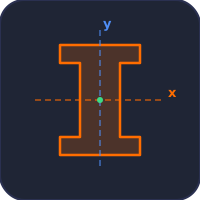
Moment of Inertia
Ix, Iy, section modulus and radius of gyration for eight cross-sections, with worked steps.
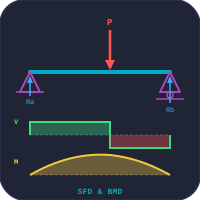
Beam Bending — SFD, BMD & Deflection
Point loads, distributed loads and moments on a beam, with shear, moment and deflection diagrams.
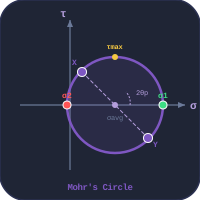
Mohr’s Circle
Principal stresses, maximum shear, von Mises and Tresca from a plane-stress state.
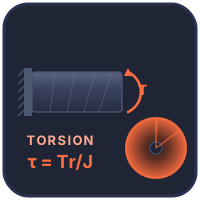
Shaft Torsion
Shear stress, angle of twist and transmitted power for solid and hollow shafts.
Thin-Walled Pressure Vessel
Hoop and longitudinal stress and factor of safety under internal pressure.
Column Buckling
Euler and Johnson critical loads and slenderness ratio for four end conditions.
Stress Concentration Factor
Kt for holes, fillets, notches and stepped shafts from Peterson’s curves.
Fatigue Life
Endurance limit, Marin factors, Goodman safety factor and cycles to failure.
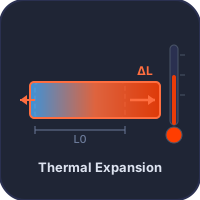
Thermal Expansion
Free expansion, thermal stress, shrink fits and bimetallic strips.
Machine Design Calculators
Sizing the elements of a machine: springs, gears, bearings, screws, joints, belts and flywheels.
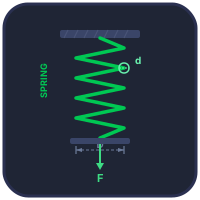
Helical Spring Design
Wire, coil and turns from the load, Wahl-corrected stress, and a load test.

Gear Strength (AGMA & Lewis)
Bending and contact stress, allowable load, power and safety factor for spur and helical gears.

Gear Train Ratio
Ratio, output speed and torque for simple, compound and worm gear trains.

Bearing Life
L10 and L10h life, equivalent load and adjusted life for ball and roller bearings.

Bearing Selection
Choose among eight bearing types by rating life, load rating, lubrication and static safety.
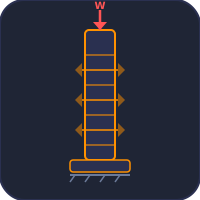
Power Screw
Raising and lowering torque, efficiency and self-locking for square, ACME, trapezoidal and buttress threads.
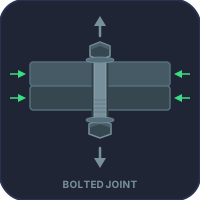
Bolt Torque & Preload
Tightening torque, preload, bolt stretch and factor of safety for metric and inch bolts.
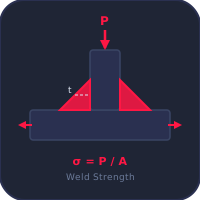
Weld Strength
Fillet and butt weld throat, effective area, stress and factor of safety.

Belt & Chain Drive
Velocity ratio, wrap angle, tension ratio, power and belt length.
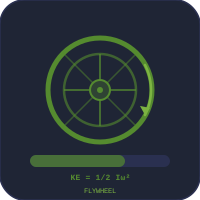
Flywheel Energy
Stored energy, moment of inertia and rim stress of disc, ring and spoked flywheels.
Manufacturing Calculators
Numbers set at the machine and on the drawing: cutting conditions, drill sizes, fits and flat patterns.
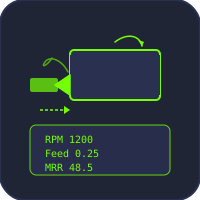
Speeds & Feeds
RPM, feed rate, cutting force, torque, power and tool life for turning, milling and drilling.
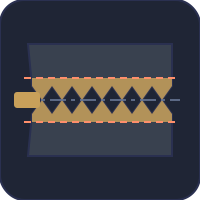
Tap Drill Size
Tap and clearance drills for metric, UNC, UNF, BSW and BSP threads, with thread engagement.

Limits & Fits
Hole and shaft limits, clearance and interference to ISO 286 and ANSI B4.1.
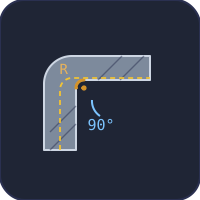
Bend Radius & Bend Allowance Calculator
Bend allowance and deduction, K-factor from a test bend, multi-bend flat patterns and a chart by gauge.
Thermal & Fluid Calculators
Heat flow, gas properties and pressure in fluid systems.
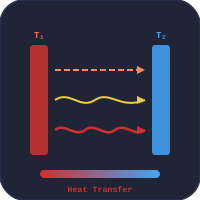
Conduction, Convection & Radiation
The three heat-flow rates side by side, for a wall, a surface and a hot body.
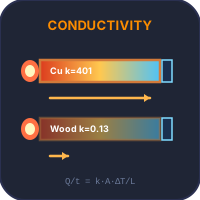
Thermal Conductivity
Fourier’s law with a table of k-values for conductors and insulators.
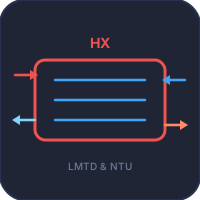
Heat Exchanger — LMTD & NTU
Outlet temperatures, duty and effectiveness for counter- and parallel-flow exchangers.

Pipe Pressure Drop
Darcy-Weisbach head loss, friction factor and the Moody chart for laminar and turbulent flow.
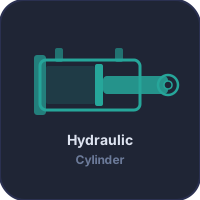
Hydraulic Cylinder
Bore, rod and stroke from the load; extend and retract force and speed; rod buckling.
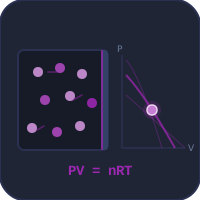
Ideal Gas Law
Solve pV = nRT for any variable, with the combined gas law and the compressibility factor.
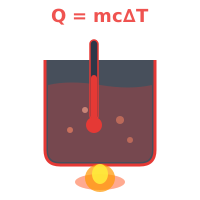
Specific Heat Capacity
Q = mcΔT with a table of 58 materials in SI and US units.
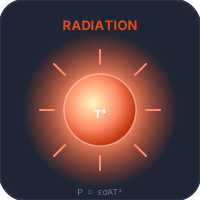
Stefan-Boltzmann Law
Radiated power, temperature, emissivity or area from P = εσAT⁴.
Electrical Calculators
Circuit values from the laws every electrical course starts with.
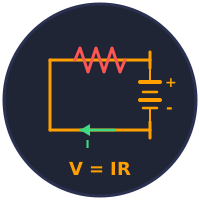
Ohm’s Law
V, I, R and P from any two values, then series, parallel and mixed circuits.
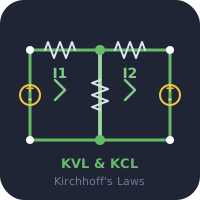
Kirchhoff’s Laws
Mesh currents, node voltages and branch power for multi-loop circuits, every equation shown.
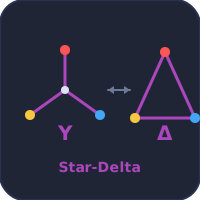
Star-Delta Conversion
The general Y-Δ transform and three-phase line and phase values.
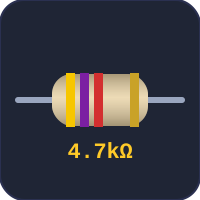
Resistor Colour Code
Resistance, tolerance and temperature coefficient from 3- to 6-band codes.
Calculators That Show Their Model
A number without a picture is hard to trust. Every calculator here draws the thing it is calculating — the cross-section, the loaded beam, the spring, the gear mesh, the pipe — and updates the drawing as the inputs change, so a wrong input usually looks wrong before it gives a wrong answer. Most also show the formula and the intermediate values, so the result can be checked by hand or copied into a report with its working.
Which Calculator Answers Which Question
Start from the question rather than the formula. The table maps common design questions to the calculator that answers them.
| If you need to know… | Use |
|---|---|
| How stiff a section is in bending | Moment of inertia |
| The largest stress in a loaded beam | Beam bending with moment of inertia |
| Whether a slender strut will buckle | Column buckling |
| Whether combined stresses cause yield | Mohr’s circle |
| How long a part survives cyclic load | Stress concentration then fatigue life |
| How long a bearing will last | Bearing life, bearing selection |
| How tight to torque a bolt | Bolt torque & preload |
| What spindle speed and feed to run | Speeds & feeds |
| What size hole and shaft give a fit | Limits & fits |
| How much pressure a pipe run loses | Pipe pressure drop |
| How much heat passes through a wall | Three modes, thermal conductivity |
| The current in a multi-loop circuit | Kirchhoff’s laws |
Standards and Units
Where a calculation is defined by a standard, the calculator names it: ISO 286 and ANSI B4.1 for fits, ISO 281 for bearing life, AGMA for gear strength, ISO 898-1 for bolt property classes, EN 13906-1 for helical springs. Many of the calculators work in SI or US customary units, and where the US practice is a different standard rather than a different unit — inch fits, UNC and UNF threads, surface feet per minute — they carry the US version rather than a conversion of the metric one.
Checking an Answer Before You Use It
Treat every calculated number, from any tool, as something to check. Confirm the units of each input. Estimate the order of magnitude by hand before trusting the result. Make sure the model fits the case — thin-wall formulas on a thin wall, Euler buckling only on a slender column, a fatigue check whenever the load repeats. And remember that a factor of safety covers uncertainty in loads and material, not an error in the calculation.
Frequently Asked Questions
Are these engineering calculators free?
Yes. Every calculator is free, runs in the browser and needs no sign-up or download.
Do the calculators show the working?
Most show the formula used and the intermediate values alongside the answer, and several give a full step-by-step solution, so the result can be checked by hand or written up with its working.
Can I use the results for a real design?
They are built for learning and for first estimates. The models are standard textbook and code methods, but a real design must be checked against the governing standard, the manufacturer's data and, where required, by a qualified engineer.
Do the calculators support US customary units?
Many do. Limits and fits includes ANSI B4.1 inch fits, the tap drill chart covers UNC and UNF, the bolt calculator includes inch bolts, speeds and feeds works in surface feet per minute, and several stress and design calculators switch between SI and US units.
Explore Related Simulators
Updated